

 Why would a magazine called Railfan & Railroad focus on transit? Your image of the “railroad,” I wager, is something rather dramatic and maybe a little aggressive. Perhaps it’s a multi-track main line with deep ballast and welded rail, carrying long, heavy freight trains from coast to coast. Or maybe it’s an obscure branch line lost in the tall grass, served by a vintage diesel pulling one or two cars to serve a customer barely hanging on. Perhaps your mental image is something out of the past, like a beautiful streamlined steam locomotive running at full clip, with a dozen matching smooth-side passenger cars on the headpin.
Transit, though? Is that even real railroading?
Within the world of transit, the distinctions between different modes are often debated. Is the Kansas City Streetcar really a streetcar, or has it become more of a light rail line in the wake of its recent extensions? Is New Mexico’s Rail Runner commuter rail, intercity rail, or somehow both? And what about Buffalo’s Metro Rail, which uses light rail-style vehicles but runs underground for half its route? Is it light rail or is it a subway?
At times, these arguments can feel like little more than hair-splitting. Yet of all the debates surrounding transit, the least productive may be whether transit should be considered railroading at all.
First, consider the numbers. According to Amtrak, ridership reached 34.5 million in 2025. Impressive as that may sound, it pales beside the combined ridership of commuter rail, heavy rail rapid transit, light rail, and other rail-based public transportation. According to the American Public Transportation Association, more than three billion passenger trips were made on rail transit last year. Put bluntly, the average American’s first experience riding a railroad is probably not aboard an intercity train. It is on transit.
Let’s also consider some geography. The vast majority of commuter rail lines actively share tracks with freight and intercity passenger railroads, whether that is one of the numerous agencies operating over Amtrak’s Northeast Corridor or something as small as California’s 22-mile-long Sprinter service that operates over a BNSF Railway branch line between Oceanside and Escondido. We can say the same thing about the numerous Metra services radiating out of Chicago or the Sounder system in Seattle, and both, I might add, operate with crews who are in the employ of the freight railways they travel over. Much of transit, then, is a direct part of the national rail network, operating over the same lines, with the same rules, and sometimes even the same personnel.
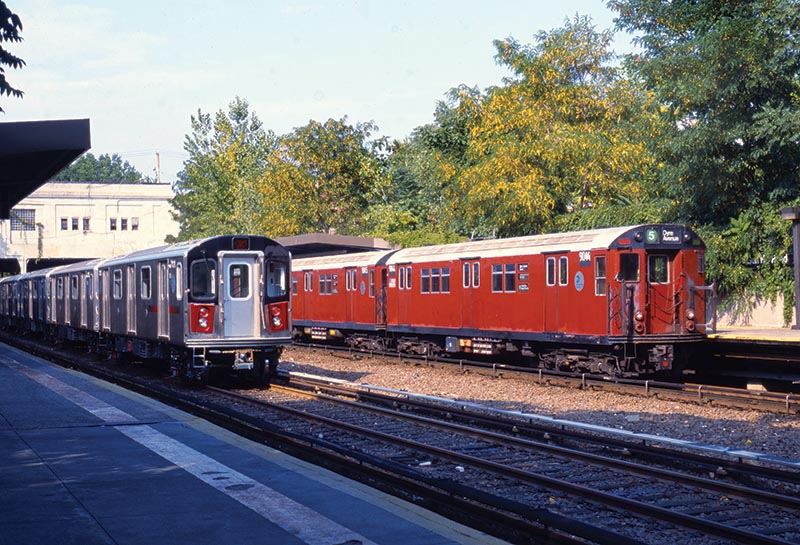
Then there are the many light rail and heavy rail services. Several of these operate over rights-of-way that were originally used by conventional railways or electric interurbans, from the Los Angeles Metropolitan Transit Agency (with many former Pacific Electric routes) to Northern Indiana Commuter Transportation District’s South Shore Line, which is a direct descendant of the vaunted Chicago, South Shore & South Bend interurban. Boston’s Massachusetts Bay Transportation Authority can likewise draw an unbroken line to the city’s original streetcar transit systems, as can San Francisco’s Muni.
The reality is this — the various modes of rail transit have far more in common than they do separating them, and the same is true when comparing transit with main line railroading. For most Americans, the first train they ride will be operated by a transit agency, and that is unlikely to change anytime soon. These systems are part of daily life for millions of people, shaping how they travel, work, and experience their communities. That alone makes them more than worthy of our attention and appreciation.
—Alexander Benjamin Craghead is a transportation historian, photographer, artist, and author.
